
Demineralized Water System
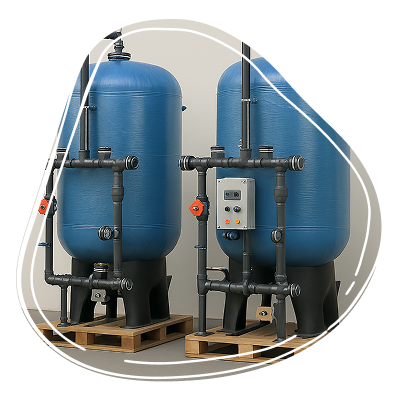
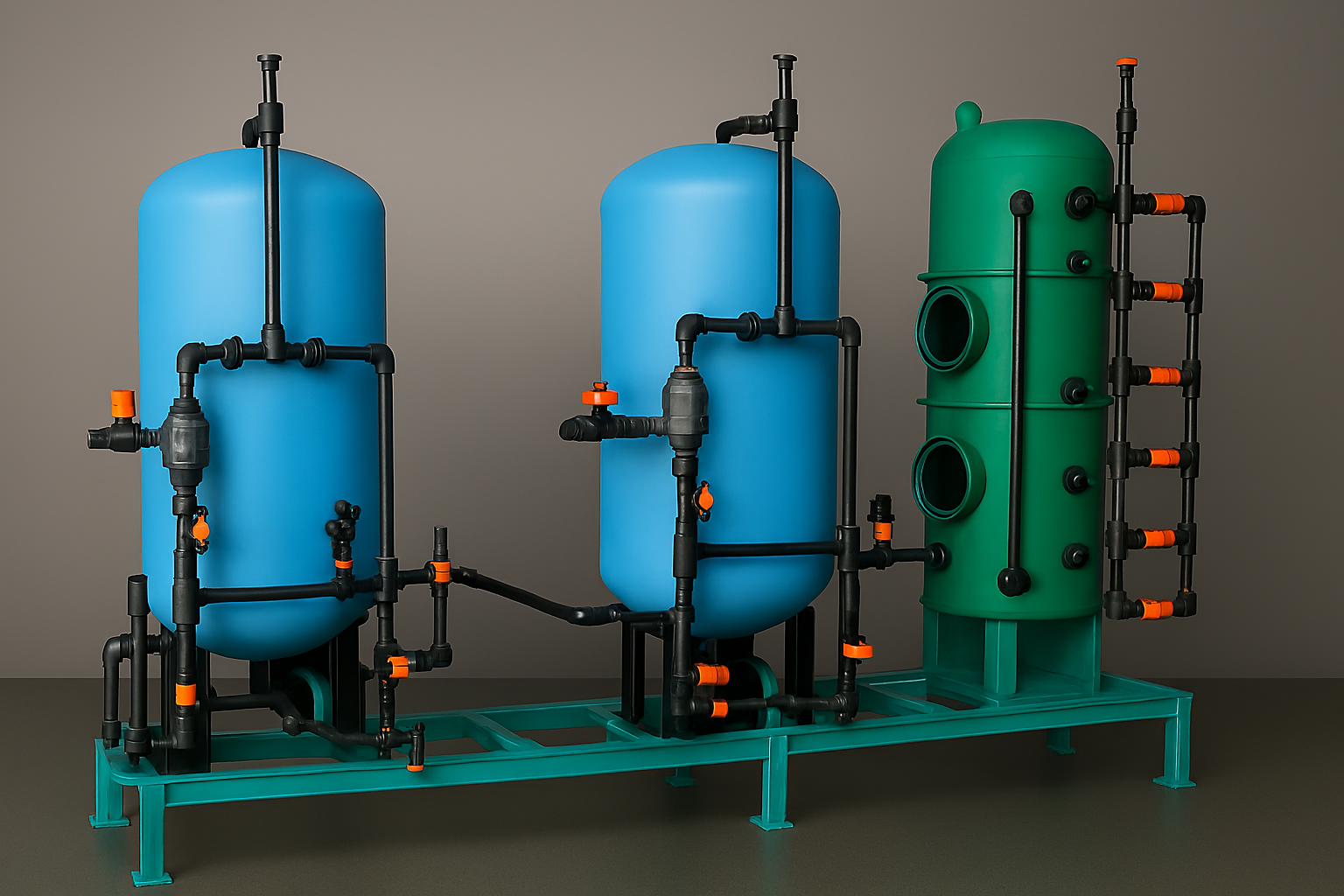
Demineralized Water System
Overview
Demineralized (DM) Water Plants are water treatment systems designed to remove dissolved ionic impurities from feed water through ion-exchange processes. These systems are widely used in power plants, laboratories, pharmaceutical industries, and electronics manufacturing where water of very low conductivity is required.
Anion Beds
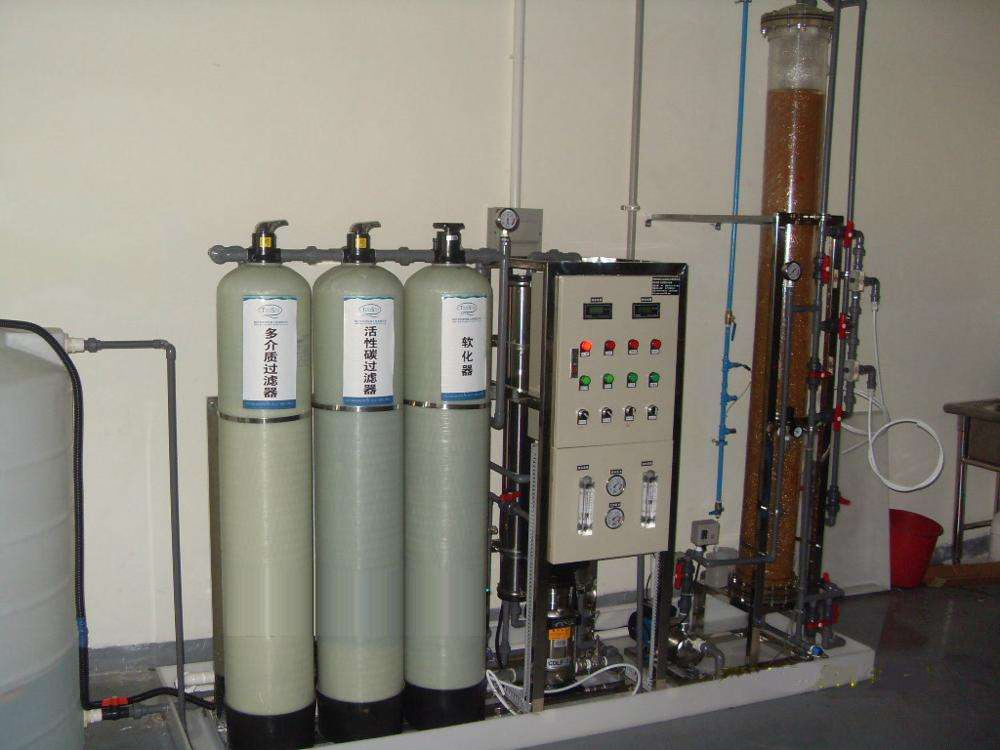
Anion Beds
Anion exchange beds contain strong base anion (SBA) resins which remove negatively charged ions like chloride (Cl⁻), sulfate (SO₄²⁻), nitrate (NO₃⁻), and bicarbonates (HCO₃⁻), replacing them with hydroxide ions (OH⁻).
Features
- Removes acidic and basic anions from water.
- Uses Type I or Type II SBA resins (OH⁻ form).
- Regenerated with sodium hydroxide (NaOH).
- Effective after cation bed in twin-bed DM systems.
- Ensures neutralization to form pure water (H⁺ + OH⁻ = H₂O).
Cation Beds
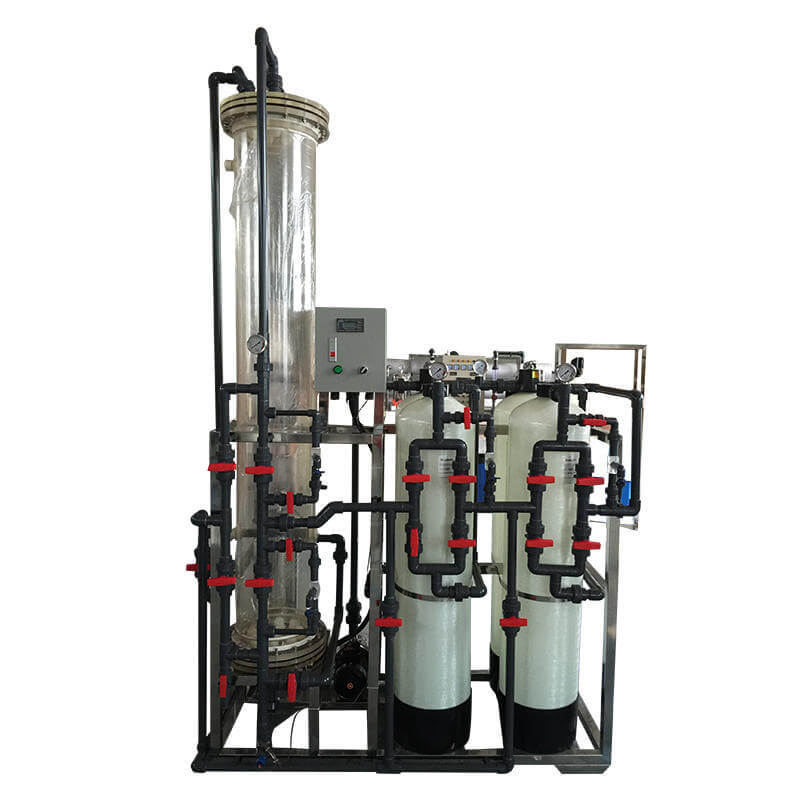
Cation Beds
Cation exchange beds contain strong acid cation (SAC) resins which replace positively charged ions such as calcium (Ca²⁺), magnesium (Mg²⁺), sodium (Na⁺), and potassium (K⁺) with hydrogen ions (H⁺).
Features
- Removes hardness and alkali metal ions.
- Uses strong acid cation resins (H⁺ form).
- Loop sanitization: Hot water (~85°C).
- Operates at pH 2–10 and temperatures up to 60°C.
- Typically first stage in DM plant setup.
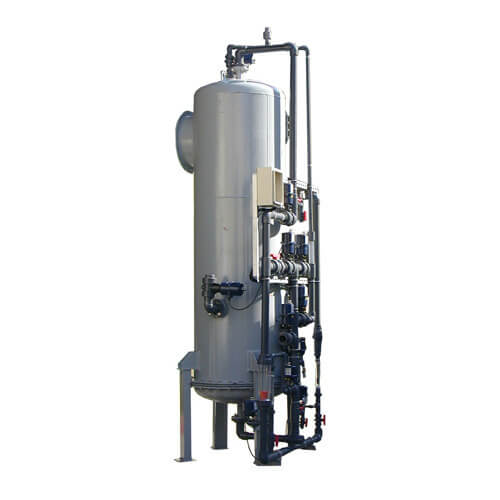
Mixed Beds
Mixed Beds
Mixed Bed Demineralizers contain a homogeneous mix of cation and anion exchange resins in a single vessel. They are used for final polishing to achieve the highest purity levels.
Features
- Final stage to reduce conductivity to <0.1 µS/cm.
- Removes residual ions left from twin-bed systems.
- Regeneration involves separation of resins and individual treatment.
- Ideal for laboratory, pharmaceutical, and power generation applications.
- Generally used after RO or EDI units for polishing.
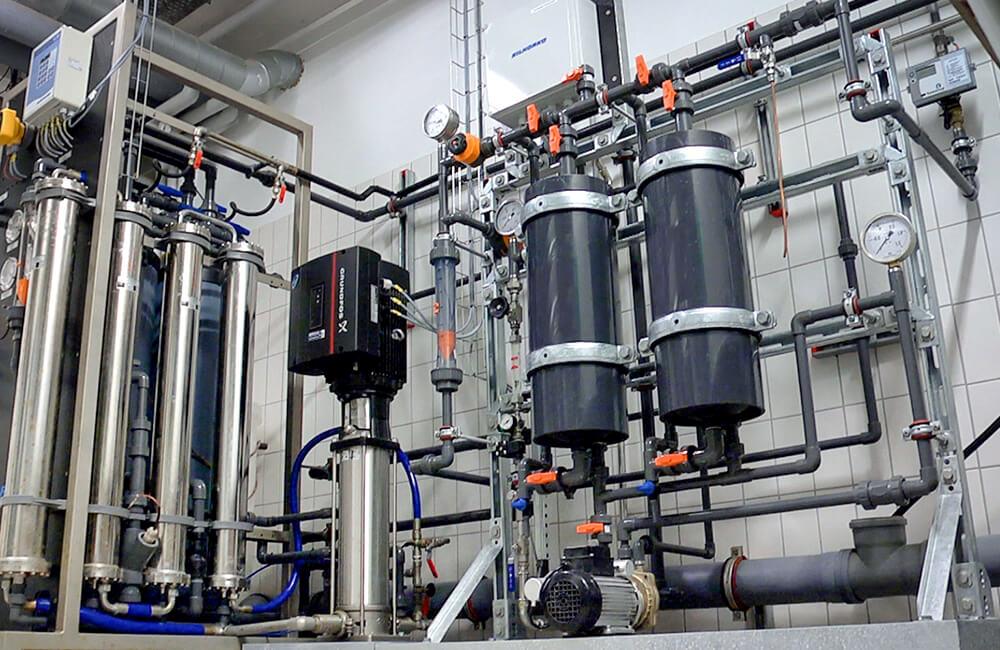
Degasser Units
Degasser Units
Degasser units are used between cation and anion beds to remove dissolved carbon dioxide (CO₂) from the water stream. This step significantly improves the efficiency of downstream anion exchange by reducing bicarbonate and carbonate load.
Features
- Removes free CO₂ after cation exchange.
- Reduces the load on anion bed and minimizes caustic consumption.
- Available in vacuum or packed tower configurations.
- Typically reduces CO₂ to less than 10 ppm.
- Enhances anion resin life and system performance.
- Pre Treatment Systems
- Potable Water Systems
- Ultrafiltration Systems
- Purified Water System
- Purified Water Generation,Storage & Distribution Systems
- Water For Injection (WFI)System
- Pure Steam Generation Systems
- WFI Storage & Distribution System
- Ultrafiltration Systems
- Lab Grade Water Generation System
Any Queries? Contact Us
Anion Beds
Anion exchange beds contain strong base anion (SBA) resins which remove negatively charged ions like chloride (Cl⁻), sulfate (SO₄²⁻), nitrate (NO₃⁻), and bicarbonates (HCO₃⁻), replacing them with hydroxide ions (OH⁻).
Features
- Removes acidic and basic anions from water.
- Uses Type I or Type II SBA resins (OH⁻ form).
- Regenerated with sodium hydroxide (NaOH).
- Effective after cation bed in twin-bed DM systems.
- Ensures neutralization to form pure water (H⁺ + OH⁻ = H₂O).
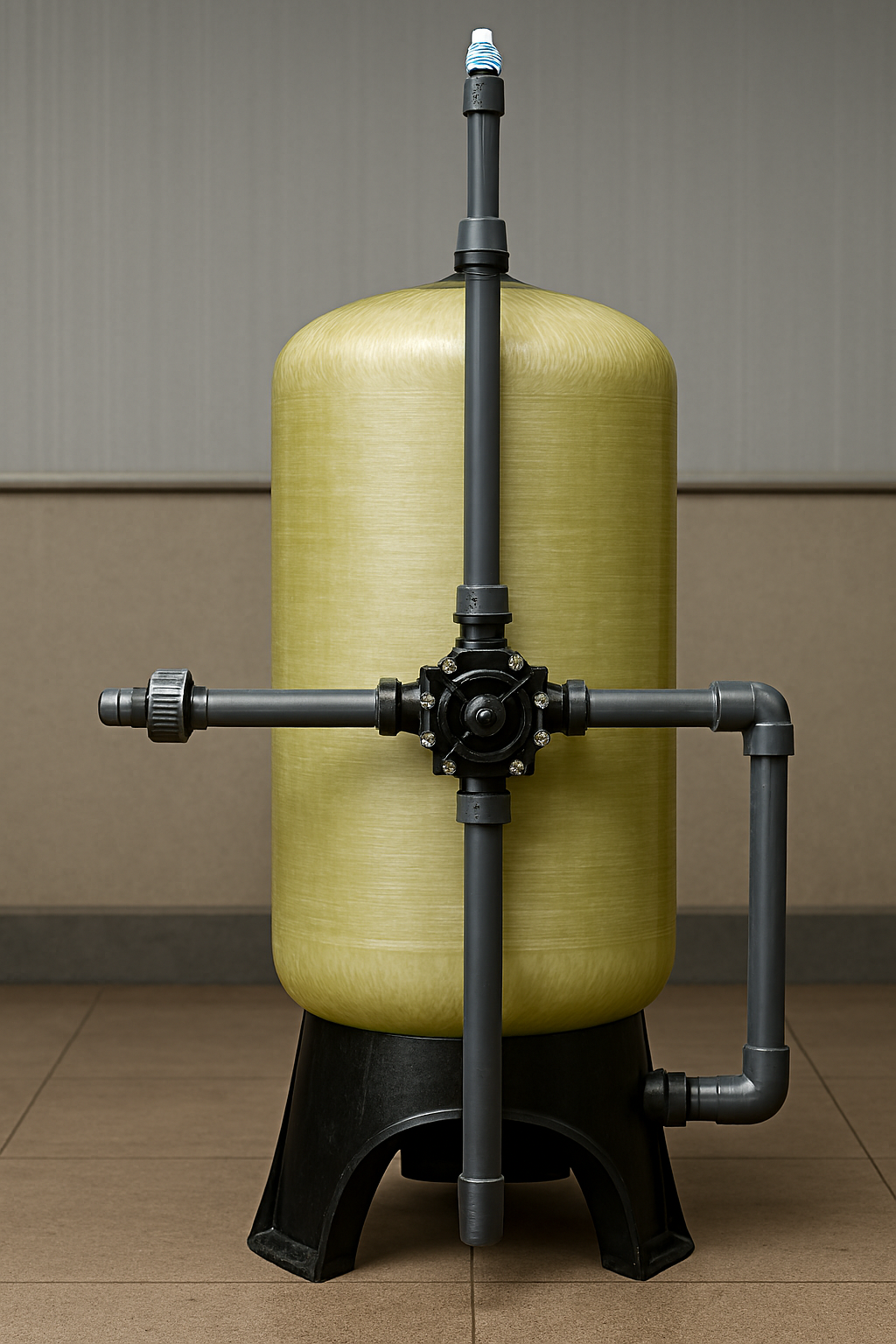
Anion Beds
Anion Beds
Anion exchange beds contain strong base anion (SBA) resins which remove negatively charged ions like chloride (Cl⁻), sulfate (SO₄²⁻), nitrate (NO₃⁻), and bicarbonates (HCO₃⁻), replacing them with hydroxide ions (OH⁻).
Features
- Removes acidic and basic anions from water.
- Uses Type I or Type II SBA resins (OH⁻ form).
- Regenerated with sodium hydroxide (NaOH).
- Effective after cation bed in twin-bed DM systems.
- Ensures neutralization to form pure water (H⁺ + OH⁻ = H₂O).
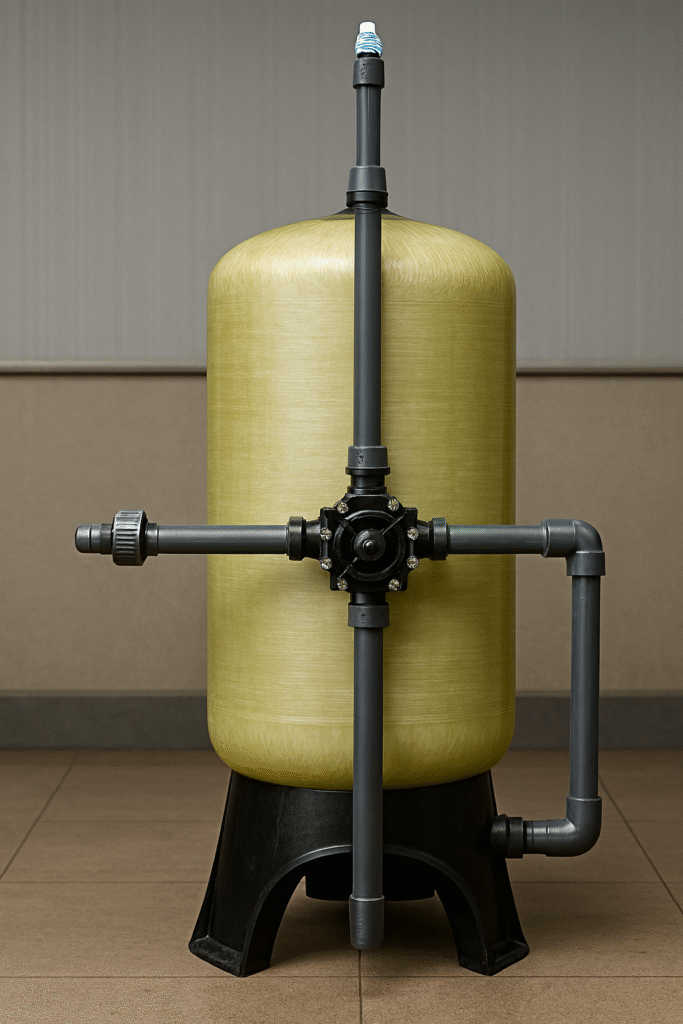
Cation Beds
Cation exchange beds contain strong acid cation (SAC) resins which replace positively charged ions such as calcium (Ca²⁺), magnesium (Mg²⁺), sodium (Na⁺), and potassium (K⁺) with hydrogen ions (H⁺).
Features
- Removes hardness and alkali metal ions.
- Uses strong acid cation resins (H⁺ form).
- Loop sanitization: Hot water (~85°C).
- Operates at pH 2–10 and temperatures up to 60°C.
- Typically first stage in DM plant setup.
Mixed Beds
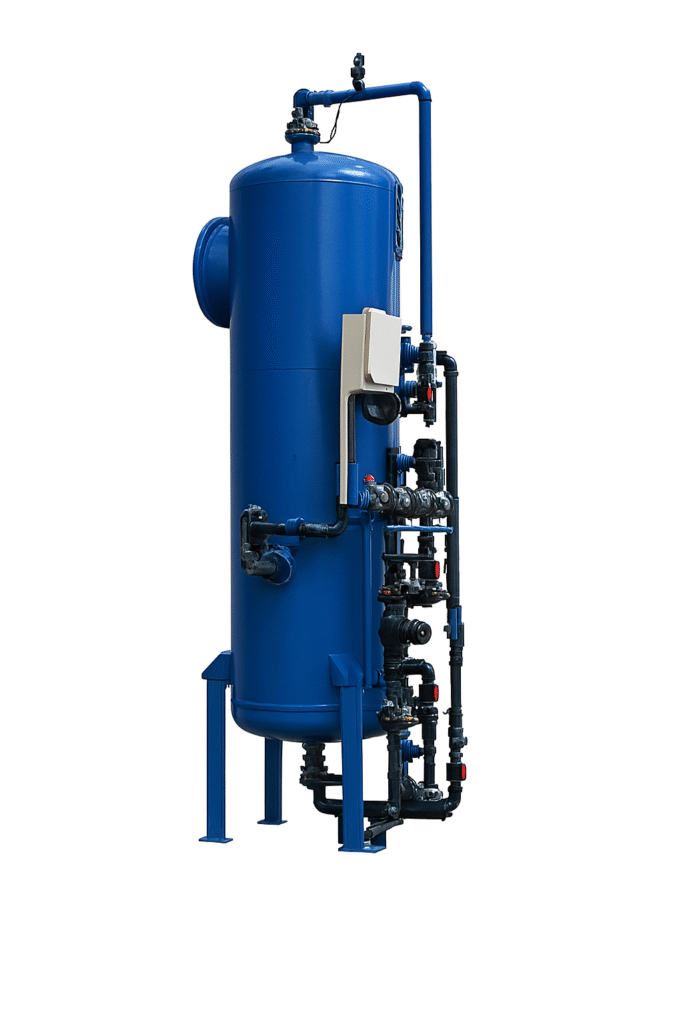
Mixed Bed Demineralizers contain a homogeneous mix of cation and anion exchange resins in a single vessel. They are used for final polishing to achieve the highest purity levels.
Features
- Final stage to reduce conductivity to <0.1 µS/cm.
- Removes residual ions left from twin-bed systems.
- Regeneration involves separation of resins and individual treatment.
- Ideal for laboratory, pharmaceutical, and power generation applications.
- Generally used after RO or EDI units for polishing.
Degasser Units
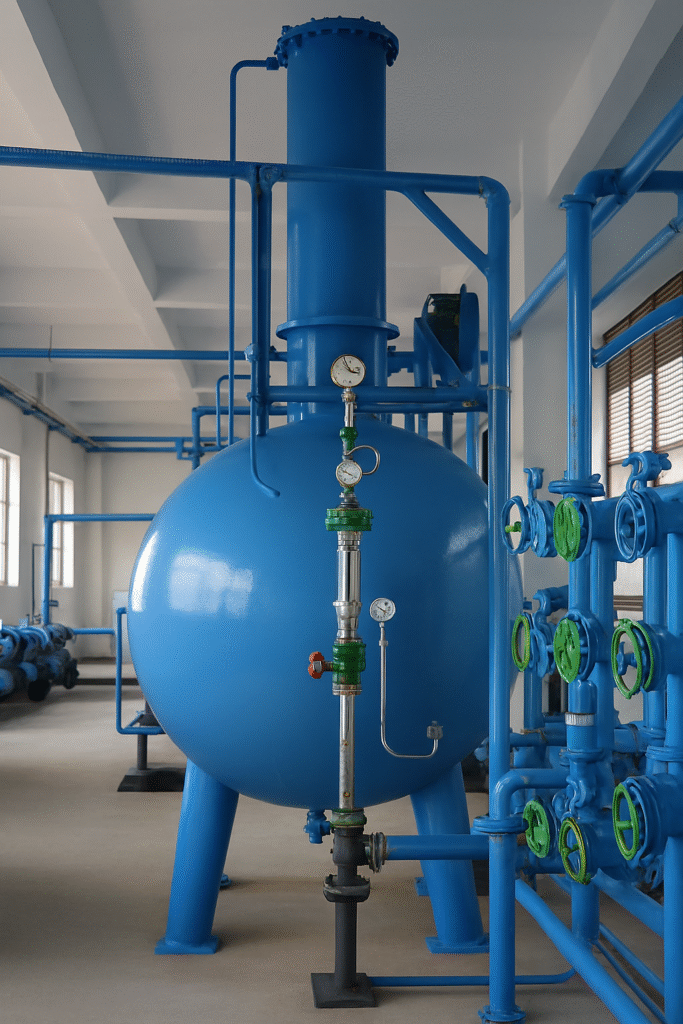
Degasser units are used between cation and anion beds to remove dissolved carbon dioxide (CO₂) from the water stream. This step significantly improves the efficiency of downstream anion exchange by reducing bicarbonate and carbonate load.
Features
- Removes free CO₂ after cation exchange.
- Reduces the load on anion bed and minimizes caustic consumption.
- Available in vacuum or packed tower configurations.
- Typically reduces CO₂ to less than 10 ppm.
- Enhances anion resin life and system performance.
Cation Beds
Cation Beds
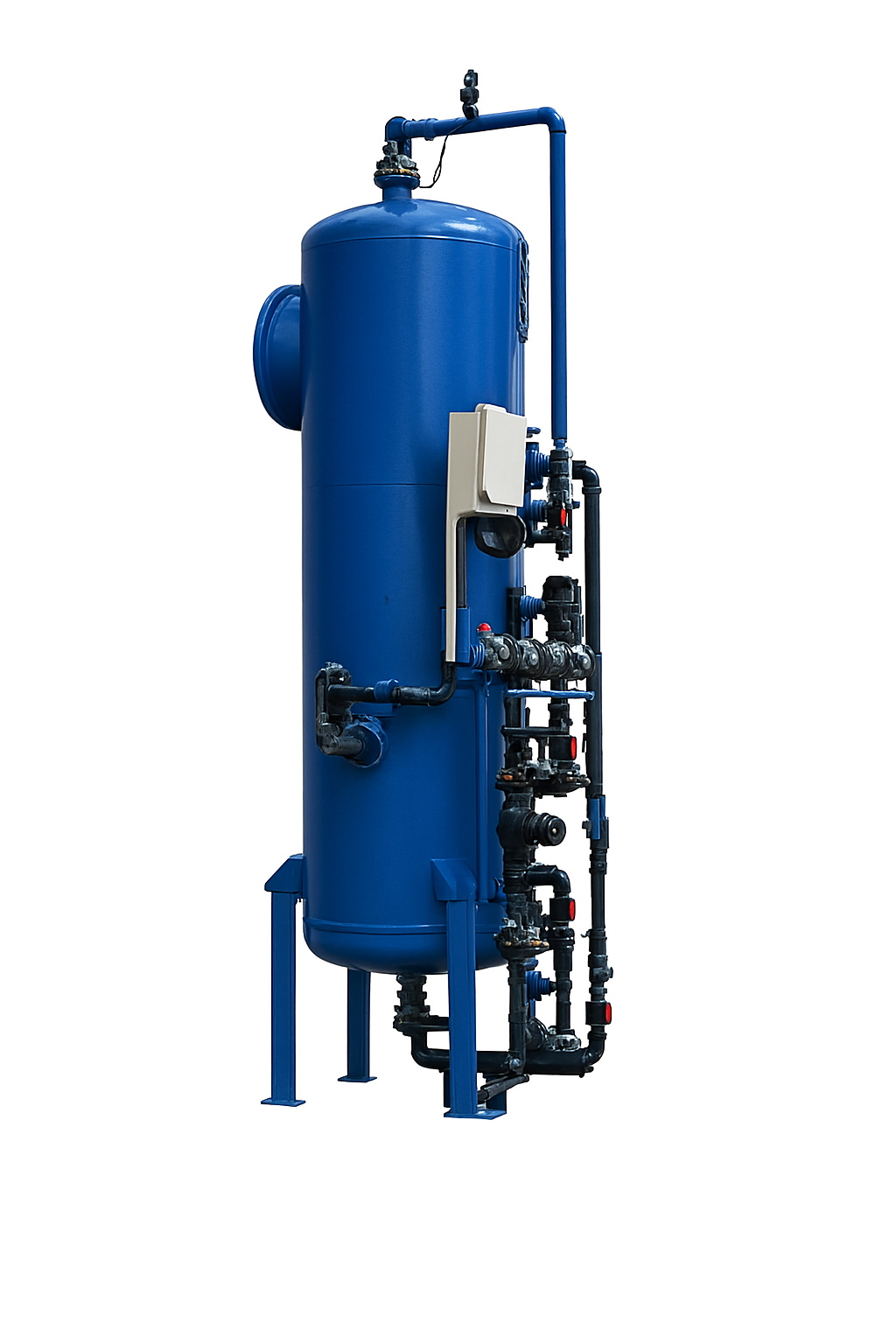
Cation exchange beds contain strong acid cation (SAC) resins which replace positively charged ions such as calcium (Ca²⁺), magnesium (Mg²⁺), sodium (Na⁺), and potassium (K⁺) with hydrogen ions (H⁺).
Features
- Removes hardness and alkali metal ions.
- Uses strong acid cation resins (H⁺ form).
- Loop sanitization: Hot water (~85°C).
- Operates at pH 2–10 and temperatures up to 60°C.
- Typically first stage in DM plant setup.
Mixed Beds
Mixed Beds
Mixed Bed Demineralizers contain a homogeneous mix of cation and anion exchange resins in a single vessel. They are used for final polishing to achieve the highest purity levels.
Features
- Final stage to reduce conductivity to <0.1 µS/cm.
- Removes residual ions left from twin-bed systems.
- Regeneration involves separation of resins and individual treatment.
- Ideal for laboratory, pharmaceutical, and power generation applications.
- Generally used after RO or EDI units for polishing.
Degasser Units
Degasser Units
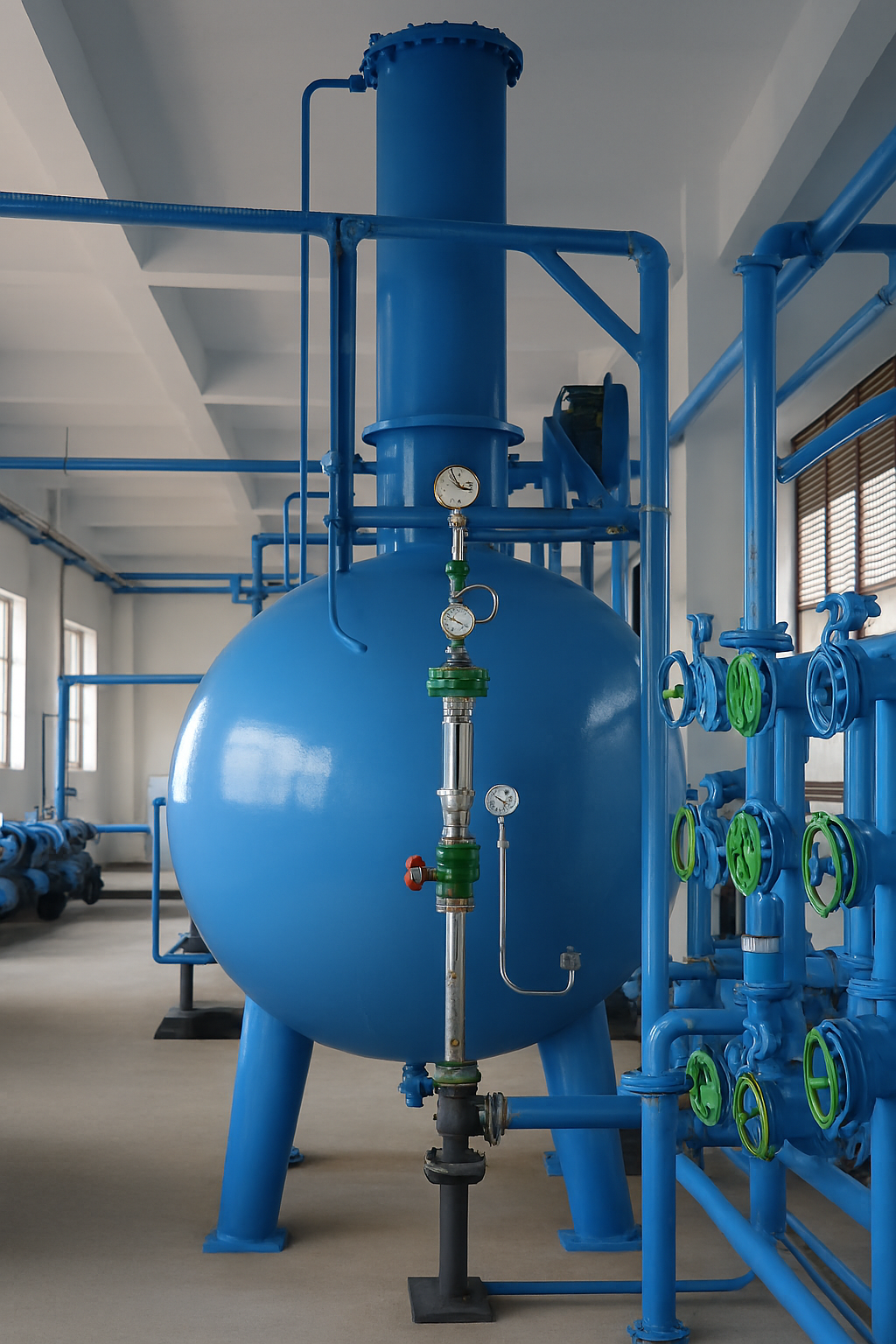
Degasser units are used between cation and anion beds to remove dissolved carbon dioxide (CO₂) from the water stream. This step significantly improves the efficiency of downstream anion exchange by reducing bicarbonate and carbonate load.
Features
- Removes free CO₂ after cation exchange.
- Reduces the load on anion bed and minimizes caustic consumption.
- Available in vacuum or packed tower configurations.
- Typically reduces CO₂ to less than 10 ppm.
- Enhances anion resin life and system performance.