
Membranes and Filters
Membranes
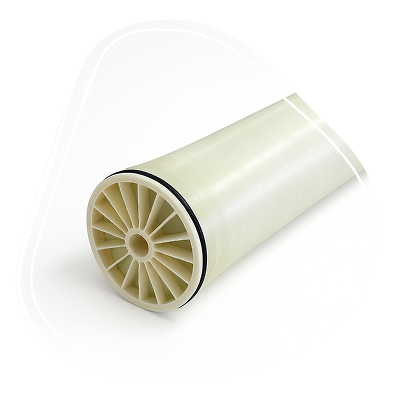
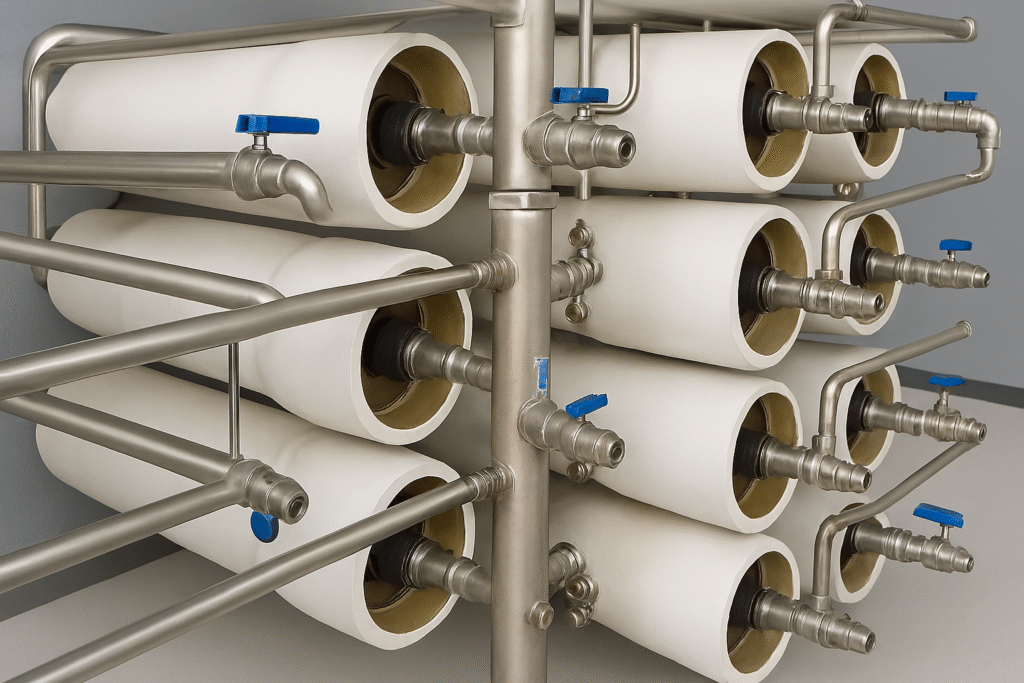
Venpure offers a wide range of high-performance RO membranes and industrial filters designed for precision water purification across pharmaceutical, industrial, commercial, and institutional applications. Our components are built to ensure long service life, low fouling, and maximum contaminant rejection—delivering reliability and regulatory compliance.
- High rejection rates for salts and impurities
- Energy-efficient, low-pressure options
- Advanced polyamide thin-film composite (TFC) construction
- Compatible with major RO system brands
- Available in pharmaceutical-grade and food-grade variants
Filters & Cartridges
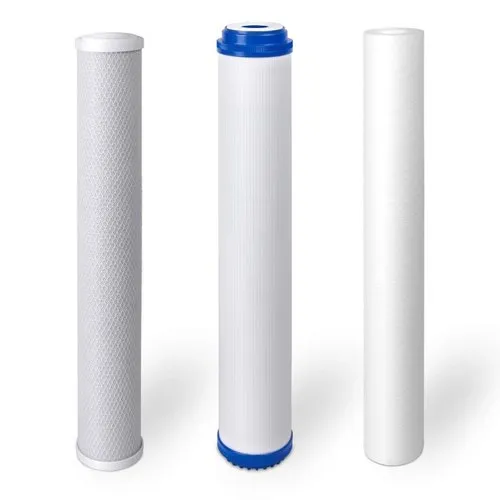
Venpure supplies high-quality micron filters, cartridge filters, carbon filters, and depth filters to protect downstream equipment and maintain water purity. Our filters are compatible with standard and customized housings
- High dirt-holding capacity and extended life
- FDA-compliant filter media options
- Broad chemical compatibility
- Available in multiple micron ratings and sizes
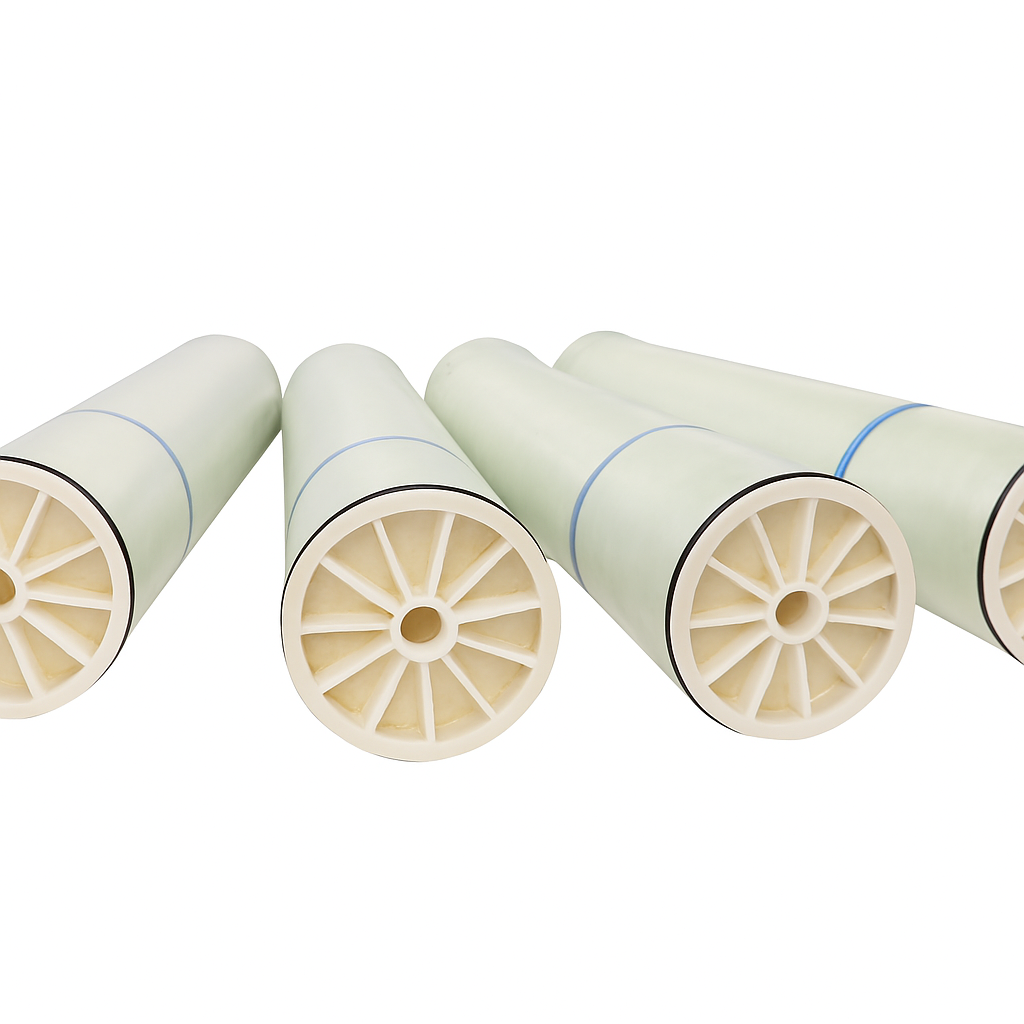
SWRO (Seawater RO Membranes)
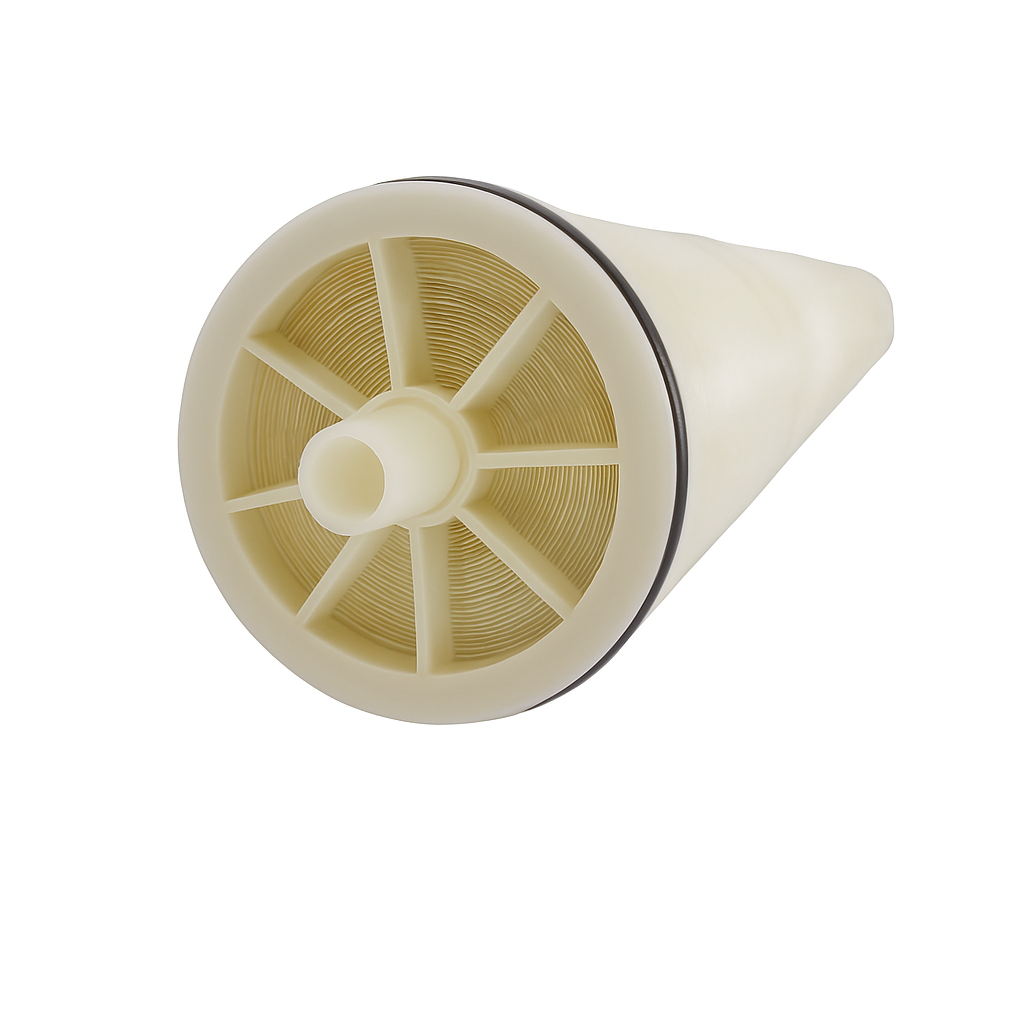
High rejection membranes for desalination and high‑TDS feed water.
- Salt Rejection: ≥ 99.7%
- Operating Pressure: 800 – 1200 psi (55 – 82 bar)
- Maximum Operating Temperature: 45°C (113°F)
- Maximum Feed Water TDS: Up to 45,000 ppm (can vary by model)
- pH Range for Continuous Operation: 3 – 10
- pH Range for Chemical Cleaning: 1 – 12
- Membrane Type: Thin Film Composite (TFC) Polyamide
- Configuration: Spiral-wound
BWRO (Brackish Water RO Membranes)
Designed for reliable performance in varying feed water conditions.
- Salt Rejection: Up to 99.5% for monovalent and divalent salts
- Operating Pressure: Typically 150 – 250 psi (10 – 17 bar)
- Recovery Rate: Up to 85 % in multi-stage configurations (varies with feedwater)
- Membrane Type: Thin Film Composite (TFC) polyamide, spiral-wound
- pH Range (Continuous Operation): 3 – 10
- Differential Pressure Limit: Typically 15 psi (1.0 bar) per element
- Maximum Operating Temperature: 45°C (113°F)
BWRO (Brackish Water RO Membranes)
Designed for reliable performance in varying feed water conditions.
- Salt Rejection: Up to 99.5% for monovalent and divalent salts
- Operating Pressure: Typically 150 – 250 psi (10 – 17 bar)
- Recovery Rate: Up to 85 % in multi-stage configurations (varies with feedwater)
- Membrane Type: Thin Film Composite (TFC) polyamide, spiral-wound
- pH Range (Continuous Operation): 3 – 10
- Differential Pressure Limit: Typically 15 psi (1.0 bar) per element
- Maximum Operating Temperature: 45°C (113°F)
Heat Sanitizable Membranes
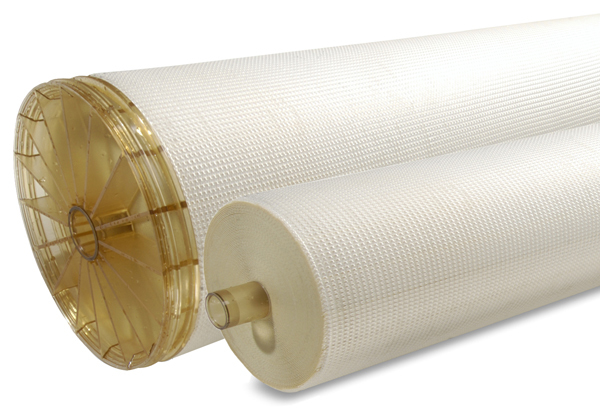
- Heat Resistance: Can withstand hot water sanitization up to 85°C (185°F)
- Membrane Type: Composite Polyamide or Polyethersulfone (PES) membranes with enhanced thermal stability
- Operating Pressure: 150–300 psi (10–21 bar), depending on model and manufacturer
- Salt Rejection: Up to 99.5%, optimized for bacteria, endotoxins, and organics removal
- Regulatory Compliance: Designed to meet FDA, USP Class VI, and GMP standards
Wound Filters (String Wound)
- Construction: Made by tightly winding a continuous strand of fiber (often polypropylene, cotton, or fiberglass) around a porous core in a spiral pattern.
- Filtration Mechanism: Depth filtration — contaminants are trapped throughout the thickness of the filter.
- Micron Rating: Typically 1 to 100 microns
- Common Uses: RO pre-treatment, chemical processing, beverages, oil & gas
Wound Filters (String Wound)
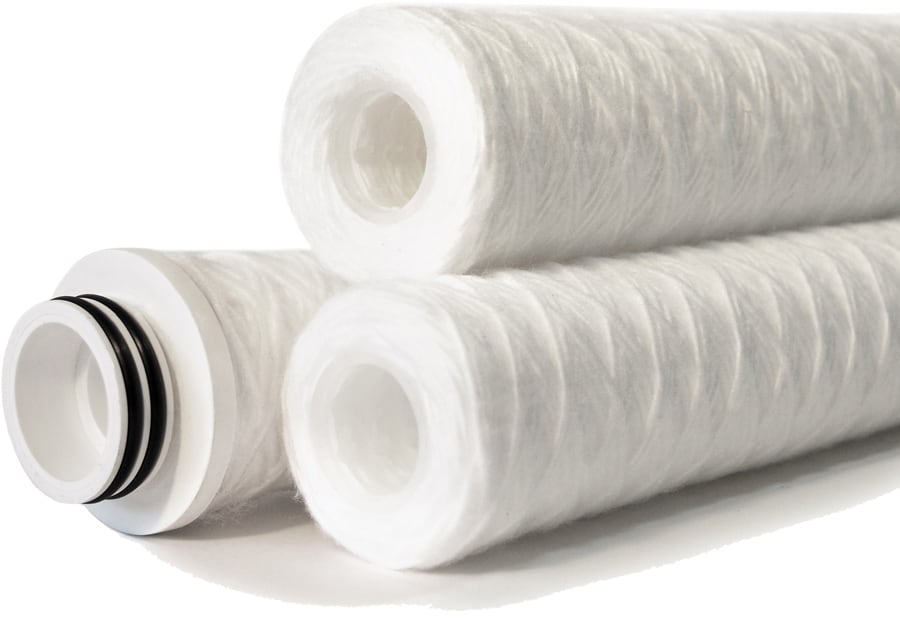
- Construction: Made by tightly winding a continuous strand of fiber (often polypropylene, cotton, or fiberglass) around a porous core in a spiral pattern.
- Filtration Mechanism: Depth filtration — contaminants are trapped throughout the thickness of the filter.
- Micron Rating: Typically 1 to 100 microns
- Common Uses: RO pre-treatment, chemical processing, beverages, oil & gas
Spun Filters (Melt-Blown)
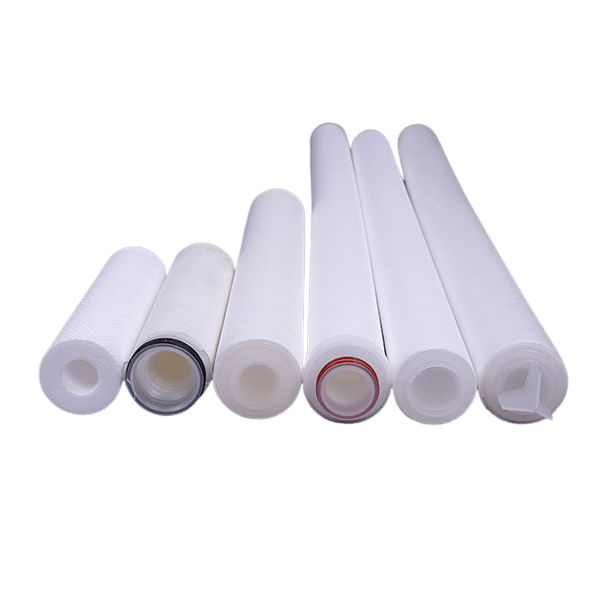
- Construction: Manufactured by melt-blowing polypropylene into a gradient-density cylindrical filter without any winding.
- Filtration Mechanism: Also depth filtration, but achieved by layers of varying density (outer layers coarse, inner layers finer).
- Micron Rating: Typically 1 to 50 microns
- Common Uses: Household filters, RO pre-treatment, pharmaceuticals, food & beverage